
From passive podcast listening to active learning: My notes and takeaways from Chris Williamson's Podcast with Chris Bailey
I listen to a decent amount of podcasts, and many of them are with very interesting people, who have interesting ideas. I would like to think that I am learning something while listening to them, but I think they end up just being a form of entertainment that goes in one ear and out the other. Sometimes things stick, but very rarely.
I find that to be a bit of a shame, so I thought that it would be beneficial to take notes while listening to a podcast, in order to absorb more of the information. Afterward, I could then try to take something away from it that I can actually use and implement in my life. I also thought it would be a good idea to share it with the world. So here we are.
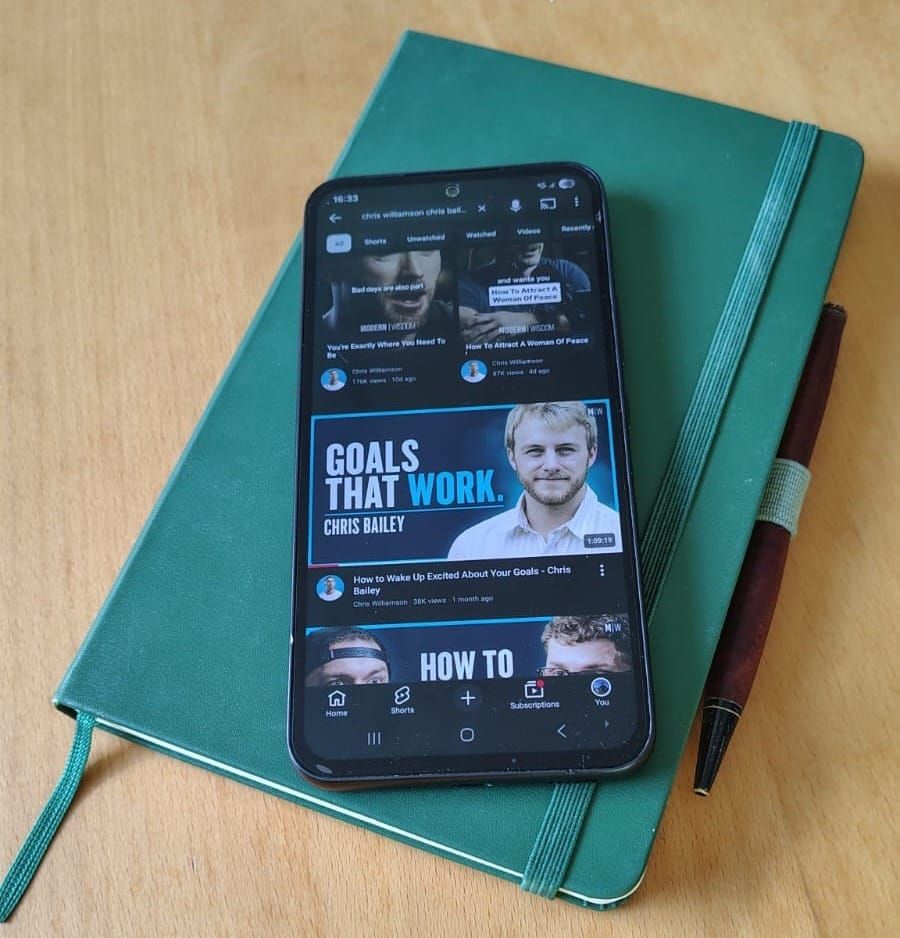
The first podcast I chose to start this with is one from Chris Williamson's podcast Modern Wisdom [1]. This podcast episode [2] was one where he interviewed Chris Bailey, who is an author and productivity expert. He recently released his new book, titled "Intentional: How to finish what you start". The discussion in the podcast revolves around many of the topics from the book.
My notes:
Everyone is motivated by a different combination of these twelve fundamental values:
1.) Self Direction
2.) Accomplishment (Achievement)
3.) Pleasure
4.) Conformity
5.) Tradition
6.) Humility
7.) Benevolence (Kindness)
8.) Universalism (protecting the welfare of people and or nature)
9.) Stimulation (Loving Novelty)
10.) Power
11.) Face (How you come across to others)
12.) Security (Personal and Societal)
An intention is basically just a plan that we are going to do something. Values, priorities, goals, plans, and tasks are all types of intentions with different lengths of time that they are expressed for. Tasks are very short lived. Plans are broader, but also short lived. Goals usually consist of tasks and plans, and are therefore expressed for longer. Your priorities define your goals, and are expressed for longer than goals. Finally, your values define you priorities, so they are expressed longest.
A good framework for goals is that they are a prediction of where you believe your current and planned actions will take you. They should not be expectations of where you will go in the future. We are terrible at predicting the future. If they are only predictions, you can more easily edit them as you move towards them.
There are two types of intentions, default and deliberate. Before you have deliberate intentions, you have default intentions. Your default intentions come from your habits, your environment, how you were brought up, etc. They are kind of like your "default settings". In order to switch your intentions from being default to being deliberate, you have to let your mind "wander" enough, in order to get to the point where you finally question your default intentions, reflect on them, and deliberately change them to direct them towards where you want to be going. If you let your mind wander, you will see that you often think about the future. This will lead you to unearth ideas and plans, and leads you down the path to switch over and set deliberate intentions, rather than automatically be on default. If you do not give yourself time to think and let your mind wander, maybe because you always fill in that time with mindless phone scrolling for example, you will be stuck in default mode.
S.M.A.R.T goals,which stands for specific, measurable, attainable, realistic, and time balanced, sound like a good idea but they do not work. Realistic goals are often not good enough because they are not challenging enough. We limit our potential if we make a goal too realistic.
When it comes to procrastination, the more boring, frustrating, unpleasant, and unstructured, the thing is to do for us, the less we want to do it. Also, the further away in the future the thing is, the less we want to do it because we can justify not doing it now more. So to increase the likelihood that you are not going to procrastinate and do something, you should edit the thing (goal, task, plan, etc.) to be more aligned with your values, structure it, and somehow make it enjoyable for yourself. Don't forget to go easy on yourself. Sometimes you will edit the thing as much as you can and it still sucks and you still don't want to do it. That may be a sign that your values are not aligned with this goal and maybe you should consider dropping it. When doing so, ask yourself if you will be happy that you did the thing anyway, and what tangible difference it will have made to your life if you did it.
My takeaways:
1.) I would like to find out which of the twelve fundamental values motivate me and how strongly. To do so, I am going to simply rank each value from one to 10, on paper, with how much I think it motivates me. If I don't understand what one of them means, then I will look it up.
2.) I would like to increase the time I give my mind to "wander". I am already working on this, by focusing on reducing useless screen time on my phone, and not always listening to music or a podcast, while doing things where I could otherwise be thinking or just experiencing the world around me. My strategy for reducing useless screen time on my phone has been to just not have the "problematic" apps on my phone at all, or to have them blocked for use during most of the day. I also find having a place at home where my phone always sits, rather than having it in my pocket, to be an easy way to reduce screen time. As for listening less to music and podcasts while doing things like showering, riding the bus, biking, working out, or running, I find that just being aware that it is beneficial for me to not listen to something every time and just think, has been enough for the habit to stick so far.
3.) I am someone who tracks and manages tasks, plans, priorities, and goals, so I think it would be a good idea to see how aligned they all are with my values, and to make sure that I have not made my goals too easy to reach, limiting my potential.
Don't be afraid to look into the things for yourself, have your own thoughts, and establish your own stance and opinions. Be the curious sheep of the flock.
Sources
[1] Williamson, Chris, host. Modern Wisdom. https://chriswillx.com/podcast/ .
[2] Williamson, Chris, host. “How to Wake Up Excited About Your Goals - Chris Bailey.” Modern Wisdom. March 28, 2026. Podcast audio, 1:09:20. https://youtu.be/Q-wOYyjD0q8.